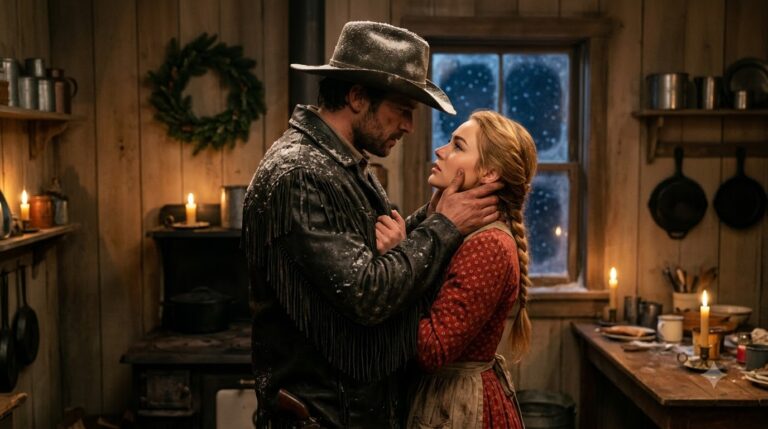
Daniel read it twice.
Then looked at Emily.
She was crying.
Again.
He put the letter down.
“What do you want me to say?”
She laughed through tears.
“I don’t know.”
“Good.”
He sat on the floor beside her chair.
“We can know nothing together.”
Emily looked at him.
“What if this means I can?”
“Then maybe you can.”
“What if I can’t?”
“Then maybe you can’t.”
She stared.
Daniel continued.
“The letter changes what the doctor knew.”
“It doesn’t change what I told you.”
Her mouth trembled.
“I spent six years believing I was broken.”
Daniel’s expression hardened.
“You weren’t.”
“I know that now.”
“No.”
He shook his head.
“Even if the first doctor had been right, you weren’t.”
Emily closed her eyes.
That sentence went somewhere deeper than all the others.
Daniel took her hand.
She whispered:
“Do you want to try?”
The question surprised him.
He thought carefully.
“Yes.”
Emily’s heart quickened.
Then he added:
“But not because of this letter.”
She frowned.
“What does that mean?”
“It means I want whatever happens between us to stay ours.”
“Not become some medical project.”
“Not turn every night into a test.”
Emily looked toward the letter.
Daniel continued.
“If someday we decide we want to try for children, then we try.”
“If not, we don’t.”
“You don’t need to decide this morning because Baltimore found an old piece of paper.”
She stared.
Then laughed softly.
“You’re annoyingly sensible.”
“I have moments.”
“Rare.”
“Cruel woman.”
She leaned down and kissed him.
The letter went into a drawer.
Not hidden.
Just put away.
Life continued.
Christmas arrived.
Daniel cut a small pine.
Emily decorated it with dried orange slices and scraps of ribbon.
Daniel claimed it looked ridiculous.
Then spent an hour adjusting one ribbon that hung crooked.
Emily caught him.
He denied everything.
New Year came under heavy snow.
February brought brutal cold.
In March, one of their cows calved during a storm.
The calf was weak.
Emily stayed in the barn with Daniel all night.
At dawn, the little animal finally stood.
Daniel smiled like a boy.
Emily watched him.
The old guilt returned.
Smaller now.
Not gone.
She stepped beside him.
“Daniel.”
“Yes?”
“I think I want to try someday.”
He turned.
“Try what?”
She stared.
He understood.
His face softened.
“Someday.”
“Yes.”
“All right.”
“You’re not going to make a speech?”
“No.”
“Why?”
“Because you’ll accuse me of practicing.”
She smiled.
Daniel touched her cheek.
“Whenever you’re ready.”
That spring, they did not make plans.
They simply stopped being afraid of the possibility.
Months passed.
Nothing happened.
Emily told herself she was fine.
Then one morning she realized she was counting.
Days.
Weeks.
She hated it.
Daniel noticed.
“You’re doing arithmetic.”
“No.”
“At breakfast.”
“I can count at breakfast.”
“Dangerous habit.”
She glared.
He smiled.
Then saw her expression.
His disappeared.
“Emily.”
She looked down.
“Nothing.”
He waited.
Finally:
“I thought maybe…”
Daniel understood.
“You’re late?”
“I was.”
Her eyes filled.
“Not anymore.”
He sat beside her.
Emily whispered:
“I didn’t realize I wanted it this much until I thought maybe it happened.”
Daniel took her hand.
No reassurance.
No “next time.”
No false optimism.
He simply sat with her.
That mattered.
They tried.
Carefully.
Not obsessively.
Still, months became a year.
No child.
Emily’s grief changed shape.
Not constant.
It arrived unexpectedly.
A baptism.
A neighbor announcing pregnancy.
Finding a tiny knitted cap her mother had saved.
Daniel grieved too.
Quietly.
Once Emily found him alone near the south fence watching a father teach his son to throw a rope.
Daniel looked away quickly.
She sat beside him.
“You can be sad.”
“I know.”
“You don’t have to hide it because of me.”
He swallowed.
“I don’t want my sadness to become your burden.”
“It already is.”
He looked toward her sharply.
Emily squeezed his hand.
“That’s marriage.”
His eyes filled.
They sat together until sunset.
Another year passed.
Then something happened that neither expected.
A fire destroyed the Dawson farmhouse six miles east.
The parents survived.
Their youngest daughter did not.
Their oldest son, Nathan, was thirteen.
His mother suffered severe burns.
His father broke both legs.
The boy needed somewhere to stay for weeks.
Daniel brought him home for “a few nights.”
Nathan remained three months.
He was quiet at first.
Angry.
Refused school.
Refused food unless Emily left it and walked away.
Daniel did not know what to do with him.
Emily did.
Not through instinctive motherhood.
Through patience.
She gave Nathan tasks.
Simple ones.
Brush the horses.
Split kindling.
Carry eggs.
He began speaking.
Then laughing occasionally.
One afternoon Daniel found him repairing a gate badly.
Daniel corrected him.
Nathan snapped:
“I know.”
Daniel said:
“Clearly you don’t.”
The argument that followed ended with Nathan throwing a hammer.