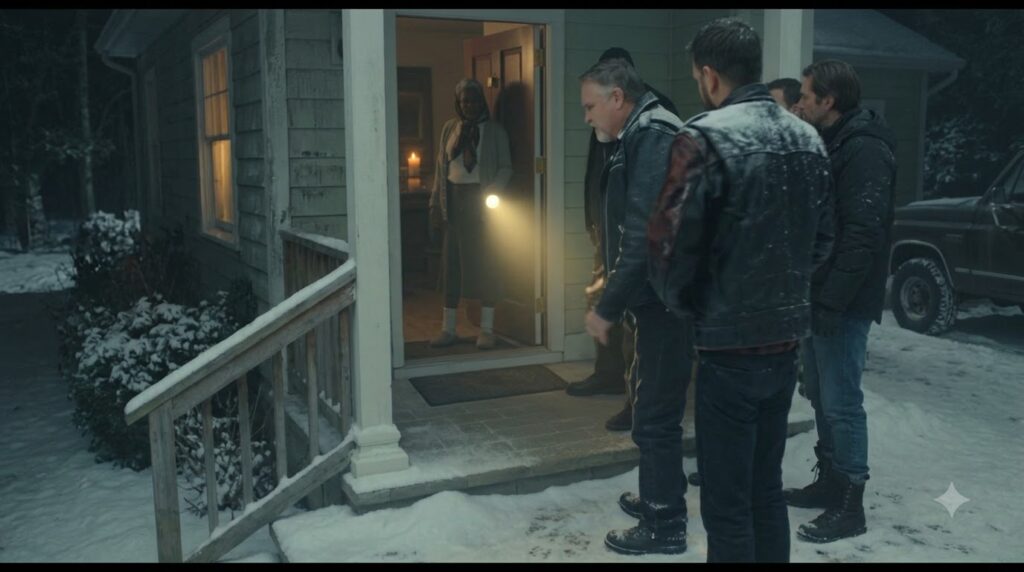
Torrential rain pounds against her kitchen window as she watches eight leather-clad bikers huddle under her rickety porch roof. Their massive Harleys gleam in the lightning flashes. At 67, Dorothy has seen enough trouble to last three lifetimes. Her hands shake as she peers through the curtains. These aren’t neighborhood boys. These are grown men. Big men. Dangerously looking men with tattoos covering their arms and patches on their jackets she can’t quite read from inside.
But something about their desperate eyes cuts through her fear. The way they’re protecting the oldest one. The way they keep looking toward her door like it’s their only hope. Outside, the storm is getting worse. Power lines are sparking. Trees are bending until they’re ready to snap. But what Dorothy doesn’t know is that the man shivering on her porch has the power to transform not just her life, but her entire neighborhood forever.
Every morning brought the same impossible choice for Dorothy Washington. The alarm cuts through the darkness at 4:30 a.m. sharp. Dorothy reaches over to silence it. Her arthritis makes even that simple movement painful. On her nightstand sits a stack of bills with angry red stamps. Final notice. Past due. Service will be disconnected.
She’s been choosing between heat and groceries for three months now. This morning, like every morning, heat loses. Dorothy pulls on her coat in the cold apartment. The same winter coat from 1998, held together with duct tape along the seams. She checks the thermostat. 52 degrees. Cold enough to see her breath, but warm enough to survive another day.
In the kitchen, she opens the refrigerator. One can of soup, a sleeve of crackers, half a gallon of milk that expires today. She closes the door without taking anything. Save it for dinner, she whispers to herself. You’ve got work to get to. But first, the walk. Two miles to the elementary school where she works as a custodian. Two miles because the bus costs $2.50 each way, and that’s $5 she can put toward her granddaughter’s college fund instead.
Dorothy steps outside into the pre-dawn darkness of East Cleveland. Her knees protest every step, but she hums an old gospel hymn anyway. This little light of mine, I’m going to let it shine. Her voice echoes off the empty streets. She passes the corner where Malik waits for his school bus. The 15-year-old shouldn’t be out this early, but his mom works the night shift at the hospital.
Dorothy waves. Morning, baby. You eat something? Malik shrugs. Not hungry. Dorothy knows that shrug. She’s worn it herself plenty of times. Without saying another word, she pulls the crackers from her coat pocket. Take these. A growing boy needs to eat. Miss Dorothy, I can’t take your food. Child, I got plenty. The lie comes easy. It’s the same lie she’s been telling for years.
The same lie that keeps the neighborhood children fed while she goes without. This is Dorothy’s world. A world where she empties her emergency fund to buy school lunch credits for kids whose parents can’t afford them. Where she patches bicycle tires with her own money and never asks for payment. Where she tutors homework on her front porch every evening, helping children read the books she can’t afford to buy.
The mason jar on her kitchen counter tells the story. Emergency fund written in her careful handwriting. Inside, $2,347 in nickels and dimes. Three months of saving every spare penny. At the school, Dorothy unlocks the janitor’s closet, her domain, her kingdom of mops and cleaning supplies. She’s worked here for eight years, ever since her husband passed. The pay is minimum wage, but it’s steady.
And steady matters when you’re 67 years old and nobody wants to hire you for anything better. Principal Martinez stops by around lunchtime. Dorothy, you’re doing great work as always. The kids love you. They do love her. She knows their names, asks about their families, slips them granola bars when she thinks they’re hungry. But love doesn’t pay the electric bill.
After school, Dorothy walks another mile to her second job. The Sunset Manor Nursing Home needs part-time help, and Dorothy’s gentle hands are perfect for feeding residents who can’t feed themselves. The work is hard, but the elderly residents remind her of her own mother. They deserve dignity. They deserve care.
Mrs. Lane holds Dorothy’s hand during dinner. You’re an angel, Dorothy. Dorothy smiles. Just doing what needs doing, sweetheart. At 8:00 p.m., Dorothy finally heads home. Her feet are screaming. Her back aches from mopping floors and lifting residents. But she stops at the corner store anyway.











