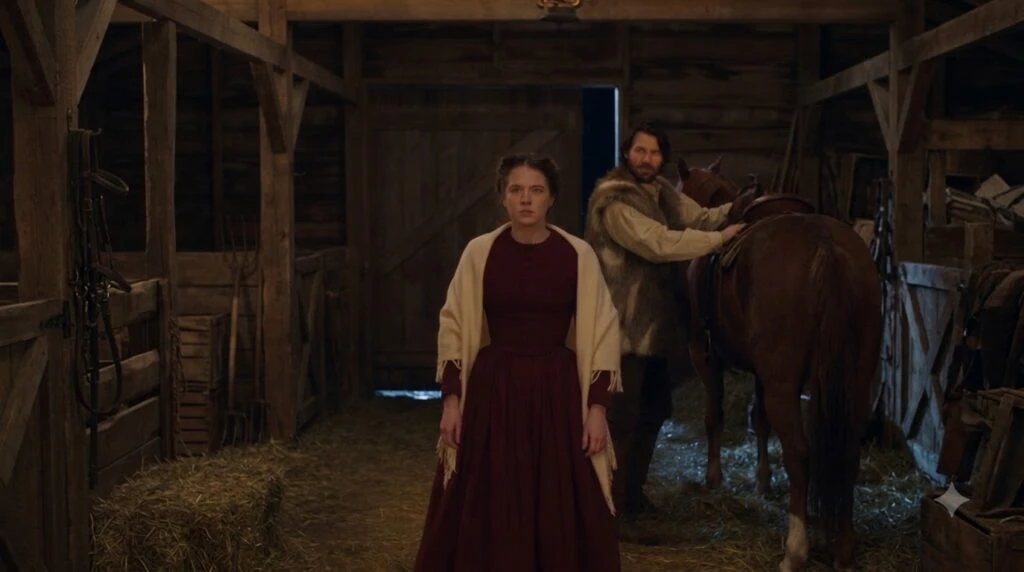
The lantern hung from a nail on the center post of the barn, and it made a small gold room inside the larger dark. Beyond its reach the timbers rose into shadow, hung with harness and old cobwebs and the sweet dust of last summer’s hay, and at the far end the wide door stood open on the night. The snow came down past it as if someone were pouring it slowly from a sack, thick and silent and without end, each flake catching the light for an instant before the dark took it back.
Inside the gold room stood a chestnut mare named Dulcie, and beside the mare stood Jonah Whitlock, and Jonah Whitlock was brushing her.
He was a very tall man, and broad in a way that made doorways look apologetic. His dark hair grew down to his collar and curled there, and his beard was full and dark and inclined to wildness no matter what was done to it. He wore a fur vest over a cream work shirt with the sleeves turned back from his forearms, and his boots were planted in the straw as if he intended to stand there until spring. The brush went down the mare’s shoulder in a long, slow stroke. Then it went down again. The mare’s coat, which had been clean an hour ago, shone in the lamplight like a polished kettle.
The small door from the yard banged against its post, and the lantern flame ducked and recovered.
Ruth Whitlock came in out of the weather with her skirts in one fist and her temper in the other.
“You can’t hide in the barn every time we fight!”
She was twenty-two years old and very pretty, and she was in no humor to be either. She was a full-figured young woman, generously curved at the bosom and the hip, and the burgundy wool of her dress fit her closely through the waist before it spread into a skirt that had already gathered a hem of snow. Her dark brown hair had been pinned up that morning in loose curls, and several of the curls had since given up and come down about her ears and the nape of her neck. A cream shawl was crossed over her breast and knotted behind her, and there was snow in its fringe. The cold had brought a high flush into her cheeks, so that she looked as if she had been pinched there by someone who loved her, and her mouth, which was full and naturally rosy, was darker than usual from being pressed together all the way across the yard. Her lashes were thick and dark and held a few flakes that had not melted yet. Her brows were straight and dark as well. Her late mother had called them the Calloway weather warning.
Jonah did not turn around.
“I’m not hiding. I’m brushing my horse.”
The brush went down. Dulcie sighed through her nose and shifted her weight from one hind foot to the other, a picture of a mare who had nowhere better to be. Ruth came up the aisle between the stalls. The old gelding Bishop put his head over his door to watch her pass, and the milk cow turned one mournful eye, and the barn cat made itself scarce.
“You’ve brushed that clean horse for an hour.”
“She likes the attention.”
He said it to the mare’s withers and in the same mild, reasonable voice he used for everything, the weather and the price of beef and the death of presidents. Ruth stopped at the edge of the lantern light. She was small beside him. Most people were. She had to tip her chin up to aim at him, and she aimed.
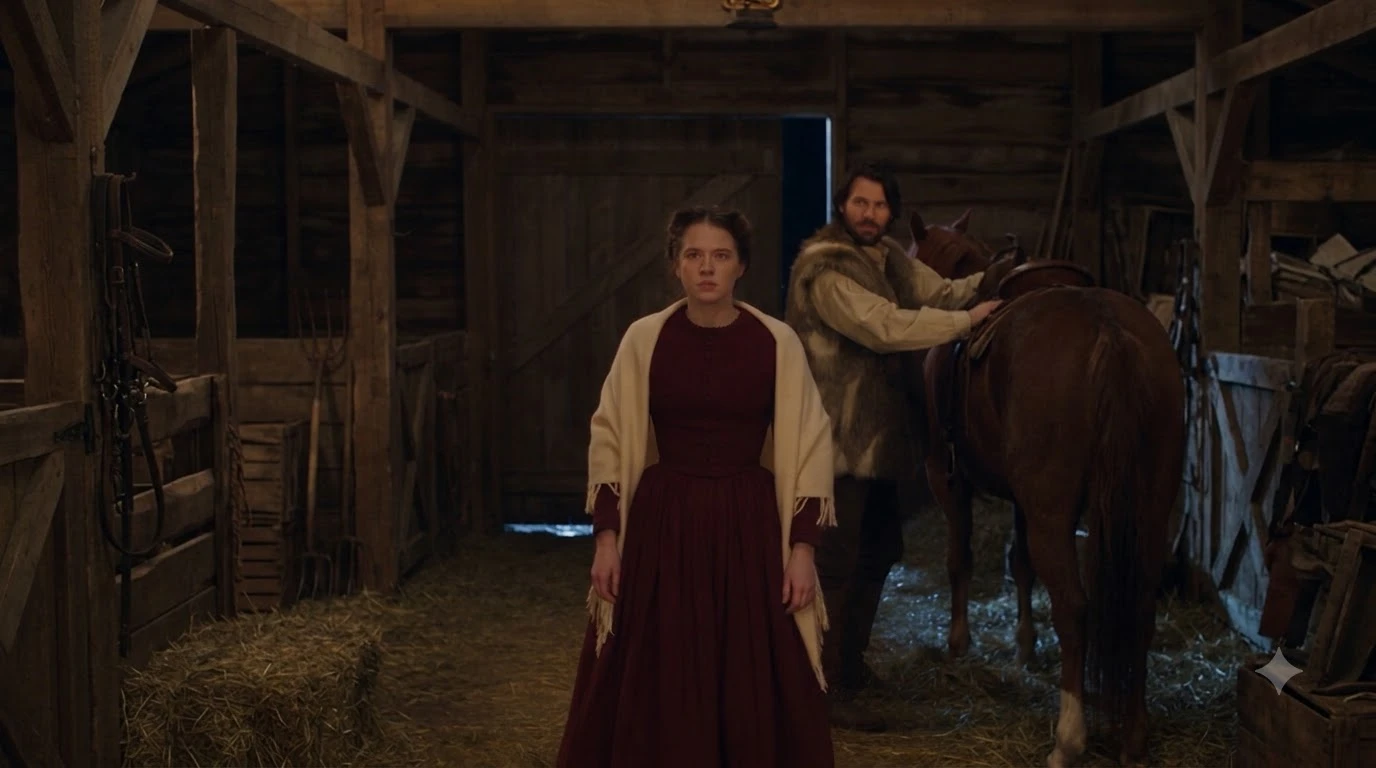
“Well, your wife would like some attention too.”
The brush froze mid-stroke.
It stayed there, pressed flat against the chestnut shoulder, for what felt to both of them like a long time. The snow went on falling past the open door. Somewhere up in the loft a mouse ran across a board and stopped, as if it too wished to hear what came next. Dulcie turned her head around, looked at Ruth, and blew a long, damp, disapproving breath.
Jonah lowered the brush. He still did not look at his wife. He looked at the wall where the bridles hung.
“I’m still angry at you, you know.”
“So am I. But I married you, not this horse.”
At that he did turn his head, though not toward her. He turned it slowly, with great seriousness, toward the mare, and he regarded Dulcie the way a man might regard a mortgage, or a hand of cards, or a long road in bad weather. He took in the white star on her forehead, the dark eye, the fine ears pricked forward. He let his gaze travel the length of her clean, shining, patient back. His face was perfectly grave.











