The wedding was in a hall that smelled like gravy and roses. Someone’s cousin gave a toast that went on too long. Greg’s father said, in the parking lot, “She’s steadier than you are. Don’t waste that.” Greg had nodded as if steadiness were a tool he already owned. Helen’s mother said, “He looks kind. Kind can get tired.” Helen had filed the sentence and then, for years, refused to take it back out.
Lucy arrived after they had stopped talking about timing and started talking about whether the car would last. She was a small red infant with a cry that made Greg walk halls at two in the morning talking about baseball, which he did not follow, because talking was the point. Helen breastfed and hated it and loved the baby anyway. They became a three-person machine. School forms. Ear infections. A beige sofa chosen because it hid crumbs. A recliner Greg claimed on Sundays. An ironing board that lived in the hall closet and came out on Saturdays like a ritual.
Greg worked in accounts at a midsize company that sold things other companies needed and nobody’s children could explain. He was good enough to be trusted and not flashy enough to be loved by the floor. He wore the navy polo on weekends because the weekday shirts had to last. Helen managed a medical office’s front desk, which meant she knew everyone’s business and kept it, a skill that would later make her own house feel like a joke she did not get to be in on.
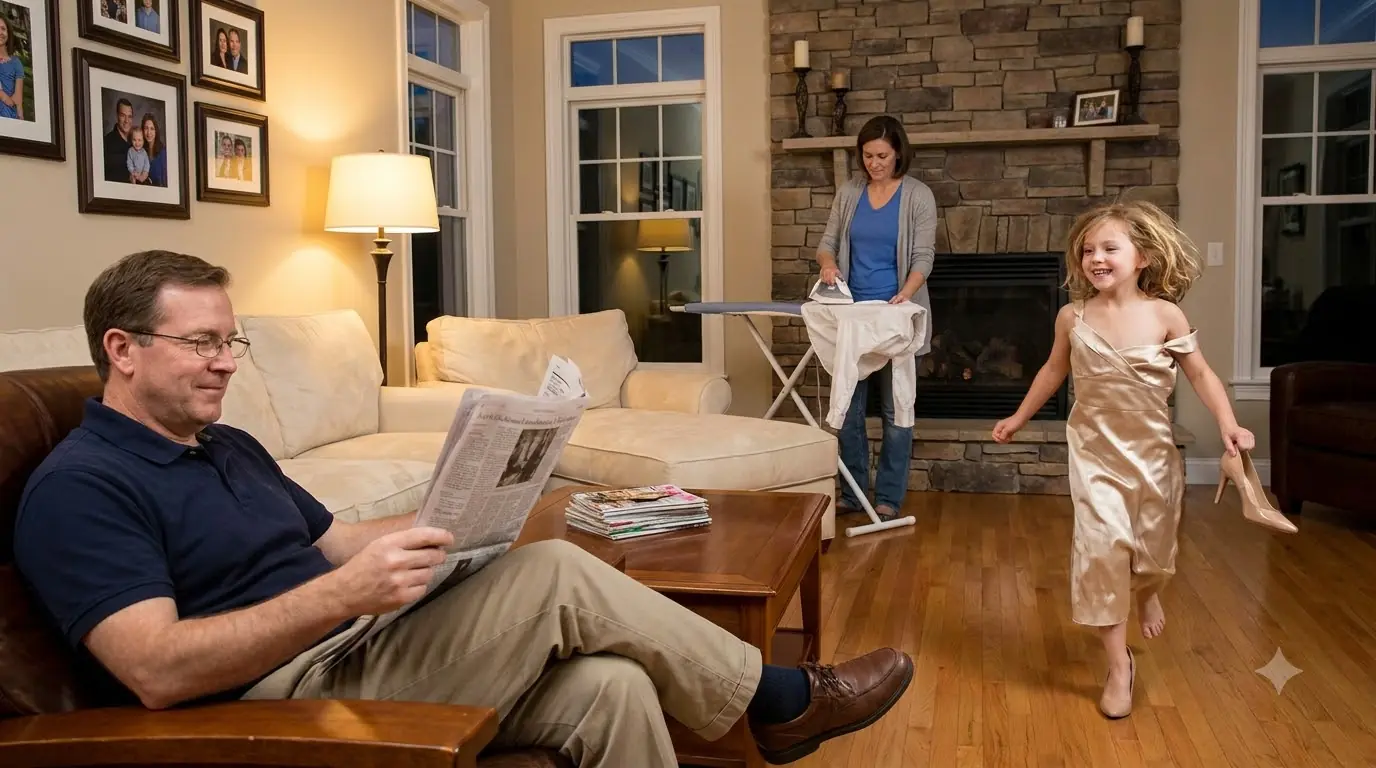
They were not unhappy. Unhappy is a clean word. They were worn. Worn looks like kindness if you do not look long. Greg’s hazel eyes had the tired kindness of a man who still opened jars and still remembered Helen’s coffee and still thought remembering was the same as remaining. Helen’s claw-clip Saturdays were a form of love: she made the house run so the house could be a place a child ran through.
The colleague’s name was Jess.
Greg did not bring Jess home in stories the way a man brings a threat home. He brought her home in small harmless mentions. Jess on the new software. Jess who stayed late. Jess who had a joke about the vending machine. Helen had met her once at a summer picnic, a younger woman with a laugh that arrived first and a dress that already looked like a different life. Helen had said, afterward, “She seems bright.” Greg had said, “She’s good at her job.” Both sentences were true. Neither sentence was the whole inventory.
The staying late became a pattern the way staying late always becomes a pattern: first as necessity, then as preference, then as a door a man can walk through without calling it a door. Greg told himself he was lonely in the way employed people are lonely, surrounded and untouched. He told himself Helen was tired of him in the specific way a wife is tired of a husband she still folds shirts for. He told himself a conversation in a parking lot was not a crime. Then the parking lot became a drink. Then the drink became last Saturday night.
Last Saturday Helen had taken Lucy to her sister’s for a birthday that ran long. Pizza. A blow-up castle. A child who did not want to leave. Helen had texted Greg: Home late. Don’t wait up. He had texted back: Okay. Drive safe. He had not been at home when he sent it. He had been in the living room of a rented-feeling apartment that smelled like new carpet and a candle trying too hard. Jess had said the company was killing her. He had said the company was killing him. Two people blaming a building is how a lot of rooms get used.
He told himself he would not stay. Staying is a series of minutes that do not announce themselves as staying. A second drink. A sentence about how Helen used to laugh at his jokes. A hand that was not his wife’s hand. The champagne dress was what Jess had worn to a dinner that was supposed to be colleagues and had become the other thing. In the morning — not morning, the late night that pretends it is still Saturday — the dress ended up over a chair in the Porters’ guest room because Greg, in a panic that thought it was caution, had said they could not go back to her place again that close to a school week, and Jess had come to the house that was supposed to be empty, and the house had not stayed as empty as the text had promised.











