The parking lot of Little Maples Early Learning Center had been designed by someone who believed that parents arrived one at a time, calmly, with their minds on nothing in particular. There were eleven spaces and a looping drop-off lane painted with yellow chevrons, and at ten minutes to six on a Thursday in October the whole thing became a slow, polite traffic jam of SUVs with their hazard lights blinking and their engines running, everyone pretending they were not in a hurry.
Terrence Hollis parked on the street instead, under a pin oak that had already started dropping its leaves onto the sidewalk in a brown, curled litter. He sat for a moment with the engine off. He had slept from nine in the morning until a little after two, which was a good day’s sleep for him, and then he had lain awake for an hour listening to the landscaping crew next door blow leaves from one side of a lawn to the other. He would leave for work at quarter past nine tonight. Between now and then there was dinner and bath and the long negotiation of Ava’s bedtime, and he liked that stretch of the evening more than he had ever told anyone. It was the only part of the day that felt like it belonged to the version of his life he had pictured when he was younger: a house, a wife, a kid in pajamas with feet, the light in the hallway left on.
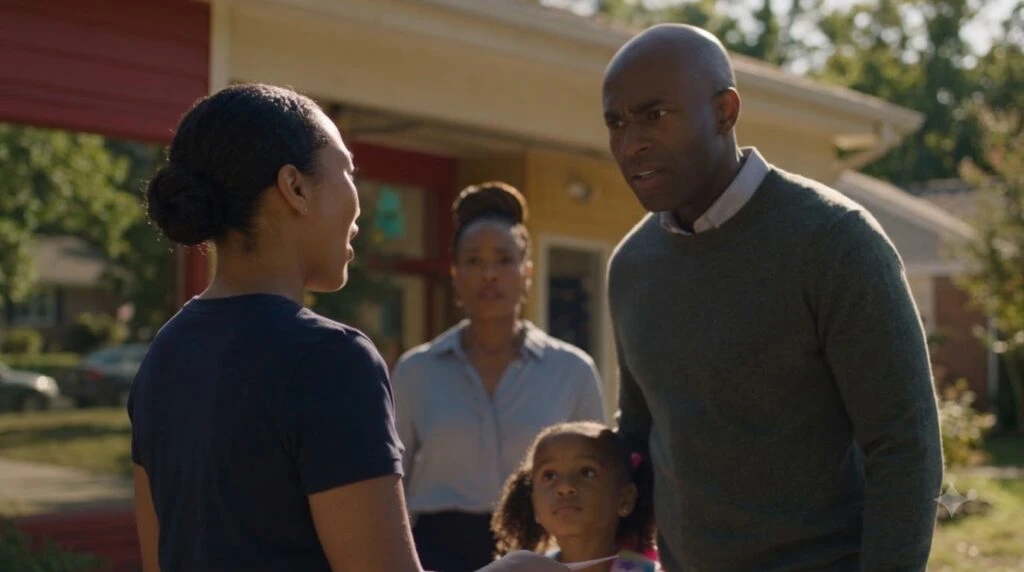
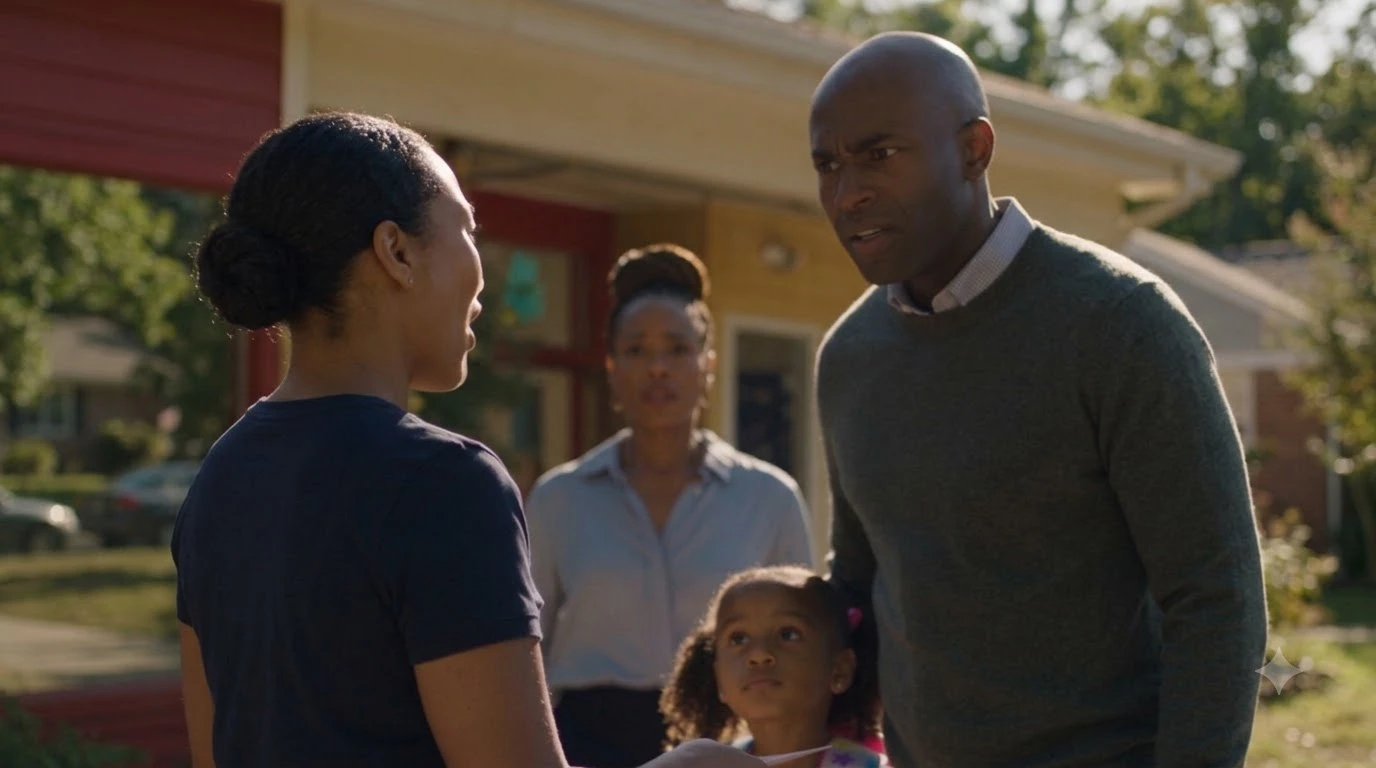
He got out of the car and pulled his gray sweater straight over his stomach. It was the sweater Camille said made him look like a retired linebacker who had taken up pottery, and he wore it partly because it was warm and partly because she said it. He was a broad man, forty years old, with a shaved head that he kept smooth with a razor every other morning and a face that strangers sometimes read as stern until he smiled. At work they called him Hollis or T or, when the grid was doing something it should not do at three in the morning, Sir, as in Sir, can you look at this.
Inside, the daycare smelled like it always did, of tempera paint and hand sanitizer and the faint, sweet, starchy smell of whatever the kids had eaten for snack. The hallway walls were covered in paper leaves with names written on them in a teacher’s tidy print. The Butterfly Room was at the end, past the cubbies. Through the half-window in the door he could see children in various states of readiness: one boy lying flat on the rug like a starfish, two girls sharing a single pair of sunglasses, a toddler from the room next door who had wandered in and was being gently steered back out.
He saw Ava before she saw him. She was at the low table by the window, kneeling on a chair, drawing with enormous concentration, the tip of her tongue showing at the corner of her mouth. Her hair was in the two puffs Camille had done that morning, one of them already listing. She was five and small for five and she drew the way she did everything, as though the fate of something important depended on it.
Miss Beth met him at the door. Bethany Kowalczyk was maybe twenty-six, with a high ponytail and a lanyard so crowded with keys and badges and little enamel pins that it clinked when she moved. She had been Ava’s lead teacher since September and Ava loved her with the fierce, possessive love five-year-olds reserve for people who let them hand out the napkins.
“Hi, Mr. Hollis,” she said. “She’s just finishing up something.”
“She’s always just finishing up something.”
Miss Beth smiled, but it was a quick smile, there and gone, and then she looked down at the clipboard in her hand and did not look up again right away. She was holding something else beneath the clipboard, a stiff square of cardstock, and she turned it over once against her chest, as if she were deciding whether it was hers to give.
“We’ve been doing family contact cards this week,” she said. “For the board in the hallway. And for our files. Each kid decorates one, and then the families fill in the back with the updated phone numbers and pickup people.” She paused. “Ava finished hers today. I was going to send it home in her folder, but.” She stopped again.
“But,” Terrence said, pleasantly.
She handed it to him.
It was a five-by-seven card with a laminated edge, and on the front, in crayon and marker and what looked like a fair amount of glitter glue, Ava had drawn her family. He knew it was her family because she had written FAMLEE across the top in letters of descending size, the last E squeezed so close to the edge that it bent around the corner. There was a house with a triangle roof and a chimney with a spiral of smoke. There was a yellow sun with a face. There was Ava herself, in the middle, recognizable by the two puffs of hair and the purple dress she did not own but often described. On one side of her was a tall figure with a round brown head and no hair and a big gray body like a box, and Terrence felt something warm move in his chest because that was him, unmistakably, sweater and all.











